
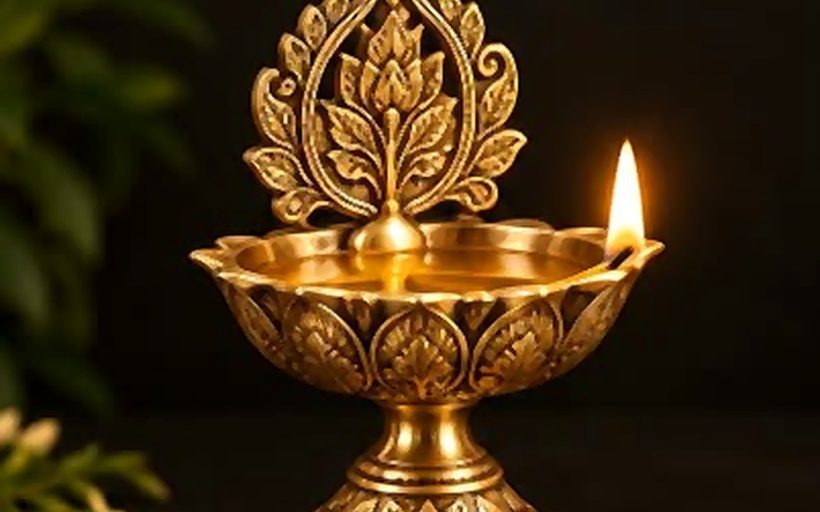
Brass has travelled with civilisation for thousands of years, and the way we craft it in Roorkee would still be recognisable to a metalworker from a century ago — with a few helpful modern tools alongside. Here is how a piece of brass becomes one of our nautical instruments or décor items.
1. Melting and Casting
Brass — an alloy of copper and zinc — is melted in a crucible furnace and poured into sand or permanent moulds shaped to the rough design. Casting gives a piece its basic body: a bell, a telescope barrel, a statue blank.
2. Turning on the Lathe
Round pieces move to the lathe, where excess metal is cut away to exact dimensions. A telescope tube or compass case earns its smooth, true surface here — you can hear the difference quality turning makes.
3. Engraving and Detailing
Our engravers cut decorative patterns by hand with chisels and gravers, following traditional motifs. For branded work, laser engraving reproduces a customer’s logo with perfect consistency across a production run.
4. Filing, Sanding and Assembly
Cast and engraved parts are filed, sanded through successively finer grits, then assembled — gimbal rings fitted, hinges set, lenses seated. This is slow, quiet work that decides how a piece feels in the hand.
5. Polishing and Lacquering
Finally, each piece is buffed to its finish — mirror-polished, antique patina or two-tone — and sealed with lacquer so it keeps its look for years with minimal care.
The result is a product with real weight, real detail and a story you can pass on to your customers. That is why we say: timeless designs, authentic craftsmanship.